St. Lucia packs a lot into one small island: twin volcanic peaks rising straight from the sea, rainforest, warm mineral springs, calm Caribbean beaches and resorts for every kind of traveler. Here's what to know before you go, whether you're planning a honeymoon, a family trip or an all-inclusive escape.
Key takeaways: St. Lucia is a volcanic island in the Eastern Caribbean, best known for the Pitons, a UNESCO World Heritage Site near the town of Soufrière. The island's international airport, Hewanorra, is in the south. The driest and busiest season runs from December to April, and the Atlantic hurricane season runs from June 1 to November 30.
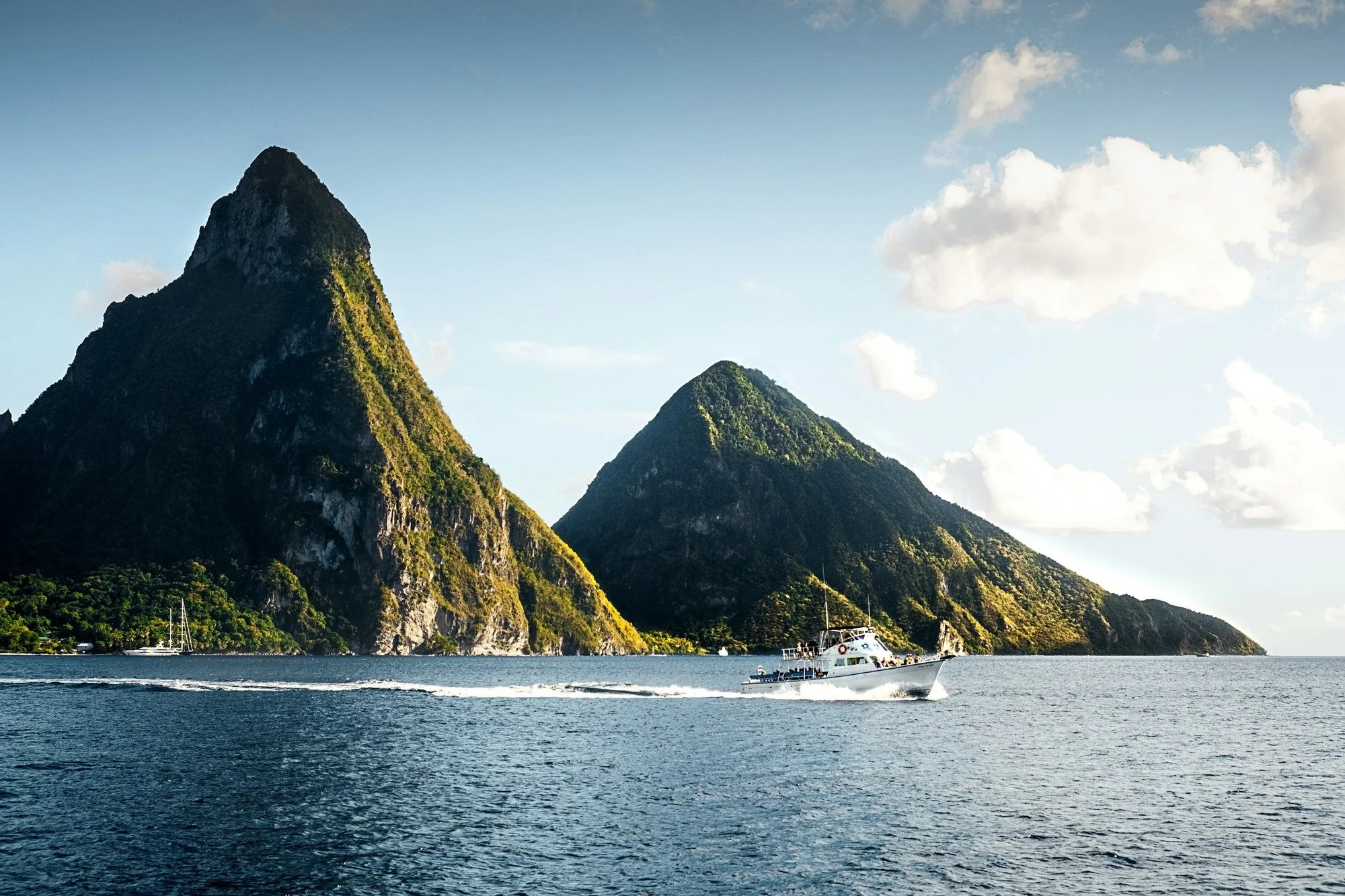
Where Is St. Lucia?
Saint Lucia, often written St. Lucia, sits in the Eastern Caribbean between Martinique, about 21 miles to the north, and St. Vincent, about 26 miles to the south. The island is only 27 miles long and 14 miles wide, but its green mountains, valleys and rainforest make it feel much bigger.
St. Lucia at a Glance
- Best known for: the Pitons, Soufrière's volcanic springs and mud baths, and calm west-coast bays.
- Getting there: Hewanorra International Airport (UVF) is in the south, and George F. L. Charles Airport (SLU), near Castries, is an inter-island airport.
- Language and money: English is the official language, and many Saint Lucians also speak Kwéyòl, a French Creole. The currency is the Eastern Caribbean dollar, and U.S. dollars are widely accepted.
- Driving: on the left.
- Time: Atlantic Standard Time all year, with no daylight saving time. That matches U.S. Eastern time in summer and is one hour ahead of it in winter.
Soufrière and the Pitons
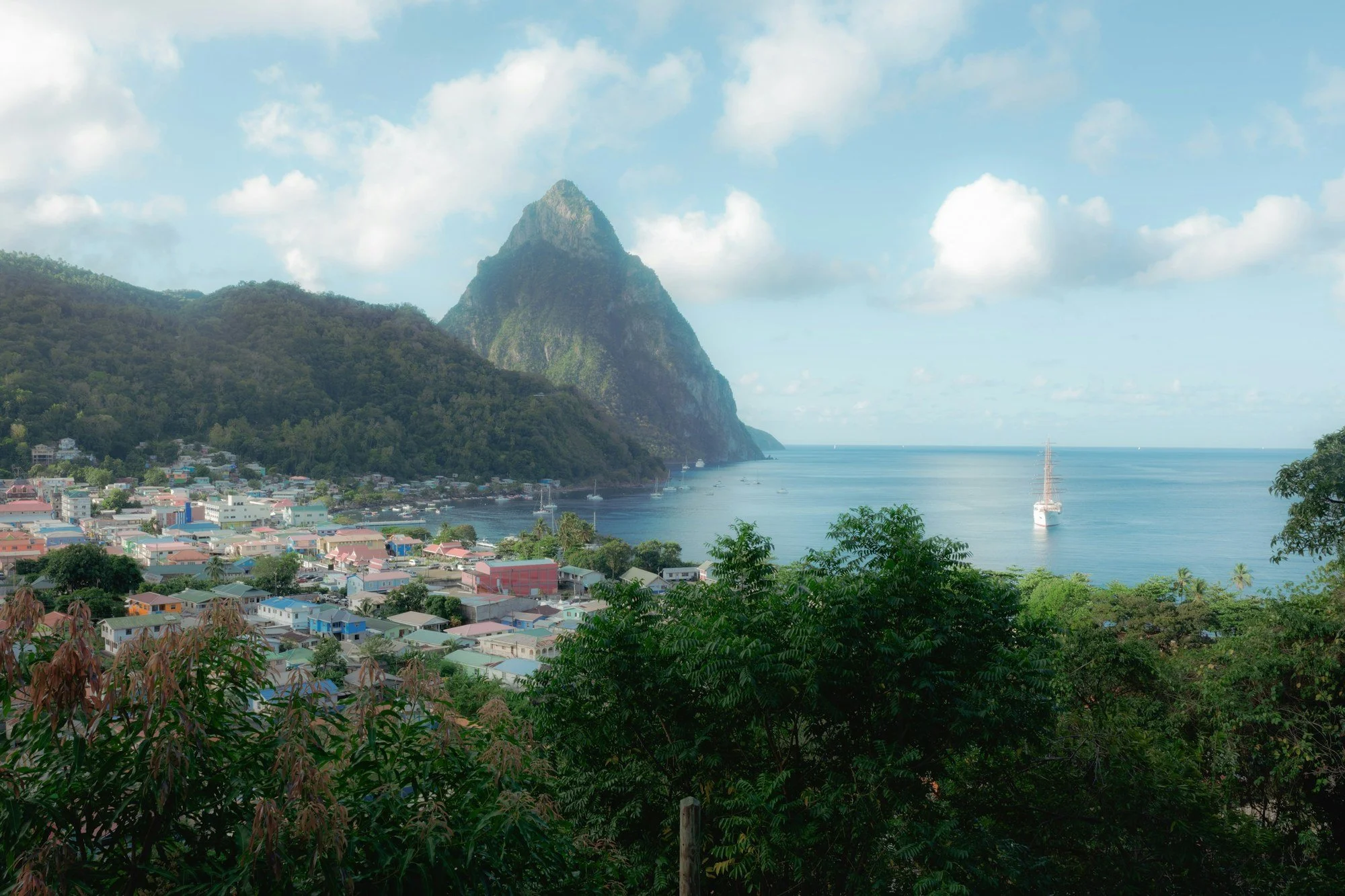
The Pitons are St. Lucia's signature sight. Gros Piton and Petit Piton are two forest-covered volcanic spires that rise side by side from the sea near the town of Soufrière, each more than 700 meters (about 2,300 feet) high. UNESCO added the Pitons Management Area to its World Heritage List in 2004. The protected area also takes in a geothermal field with hot springs, plus coral reefs that cover more than half of its marine area, where hawksbill turtles are seen close to shore.
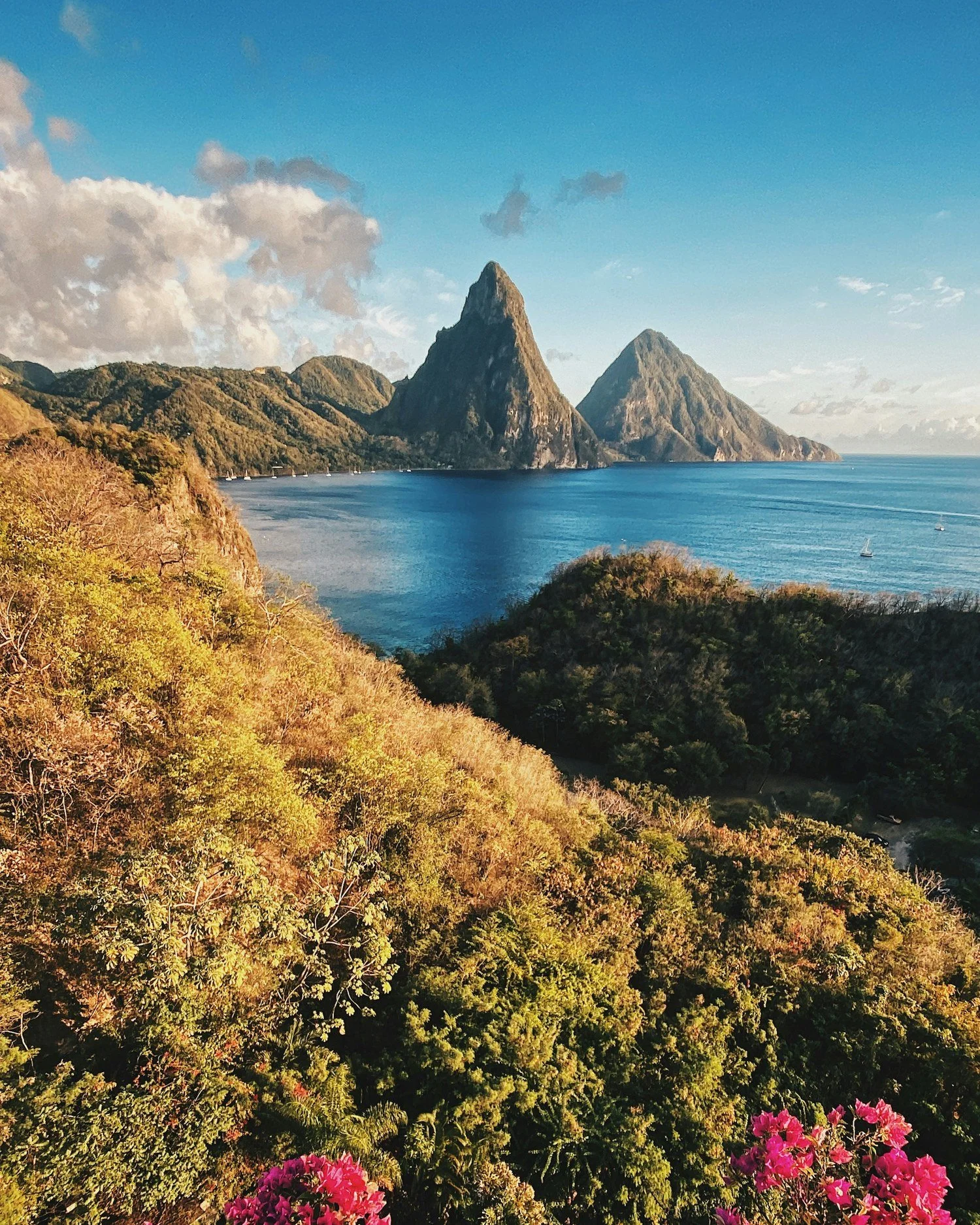
Hikers can climb Gros Piton with a certified local guide, which is required. It's a moderate to challenging trek through forest and rocky terrain, with wide views of the coast from the top. Petit Piton is a much steeper, more technical climb, also with a required guide.
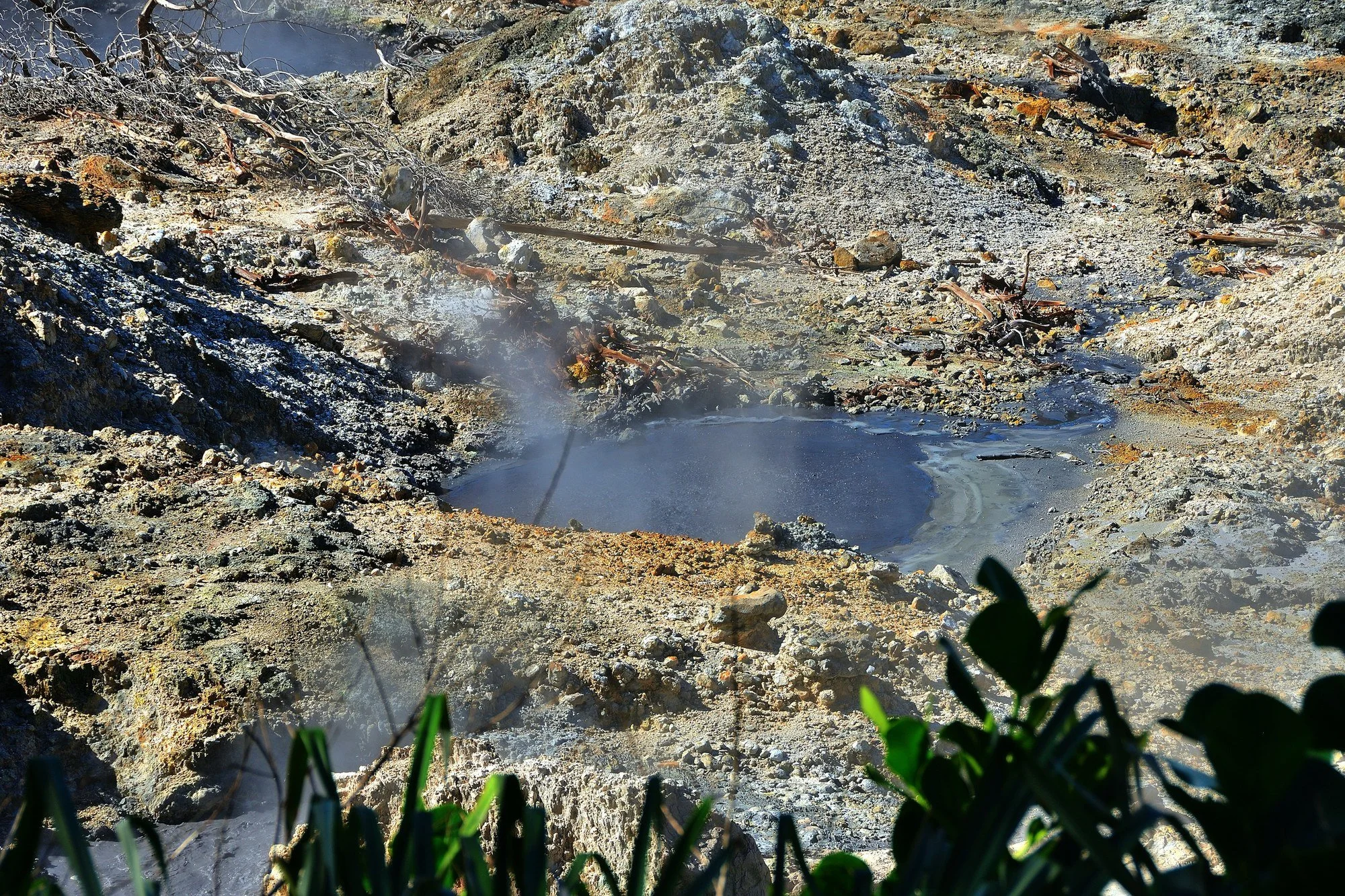
Just outside Soufrière, Sulphur Springs is often called the Caribbean's only drive-in volcano. A short guided route passes steaming vents and bubbling pools, and nearby mud baths let you coat yourself in warm volcanic mud before rinsing off in mineral water. Nearby Diamond Falls Botanical Gardens adds mineral baths and a waterfall known for its changing colors.
Beaches and Snorkeling
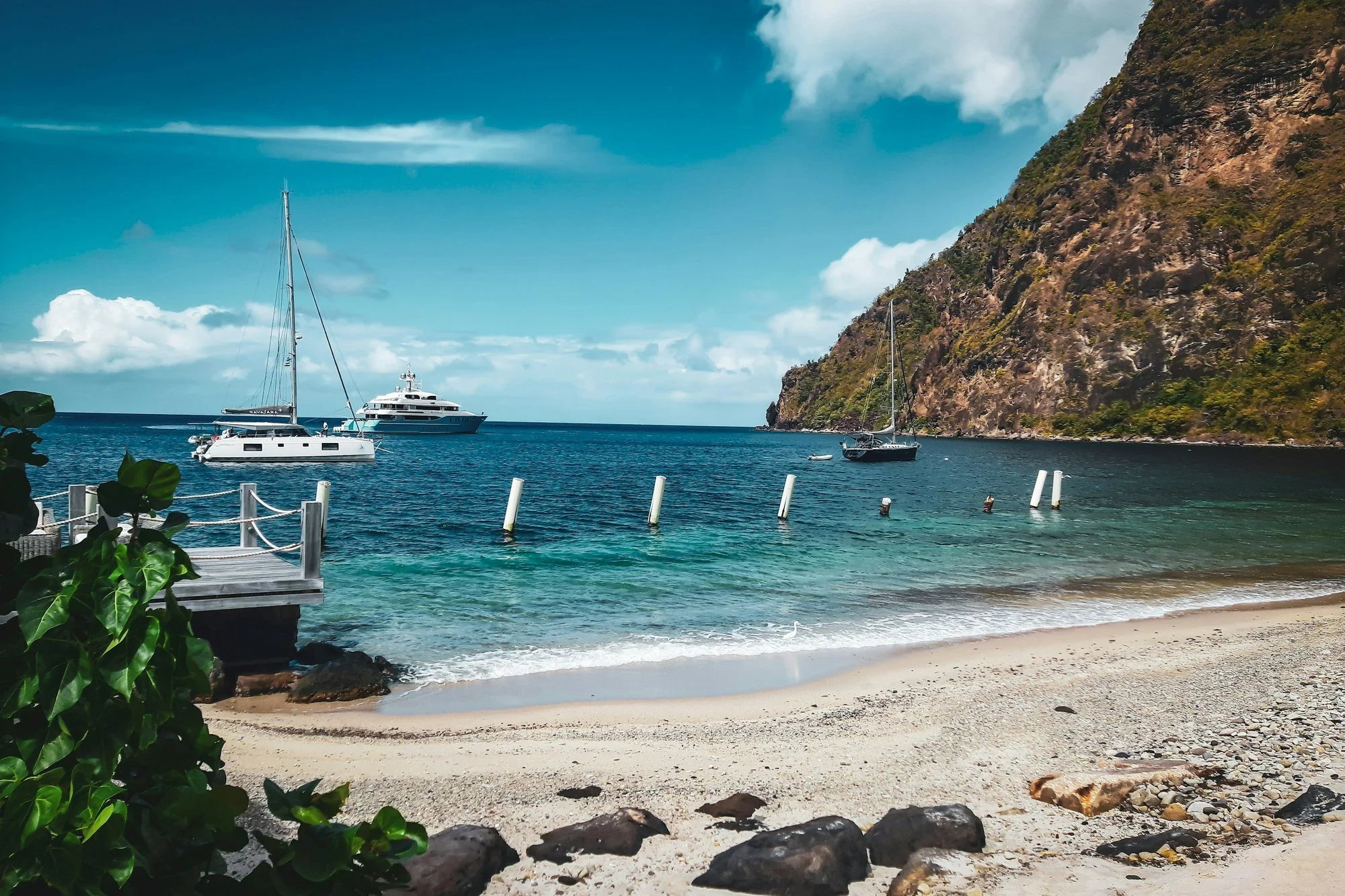
St. Lucia's west coast faces the calm Caribbean Sea, while the east coast faces the Atlantic, where some beaches have bigger waves. A few favorites:
- Reduit Beach in Rodney Bay is a long stretch of golden sand with calm water, water sports, restaurants and bars.
- Sugar Beach (Anse des Pitons) sits right between the two Pitons, with white sand and clear water for swimming and snorkeling.
- Anse Chastanet, near Soufrière, has a coral reef that begins just offshore, which makes it one of the island's best spots for snorkeling straight from the beach. Quieter Anse Mamin is about a 10-minute walk away along a shaded path.
Use reef-safe sunscreen, and don't touch the coral or marine life.
Marigot Bay
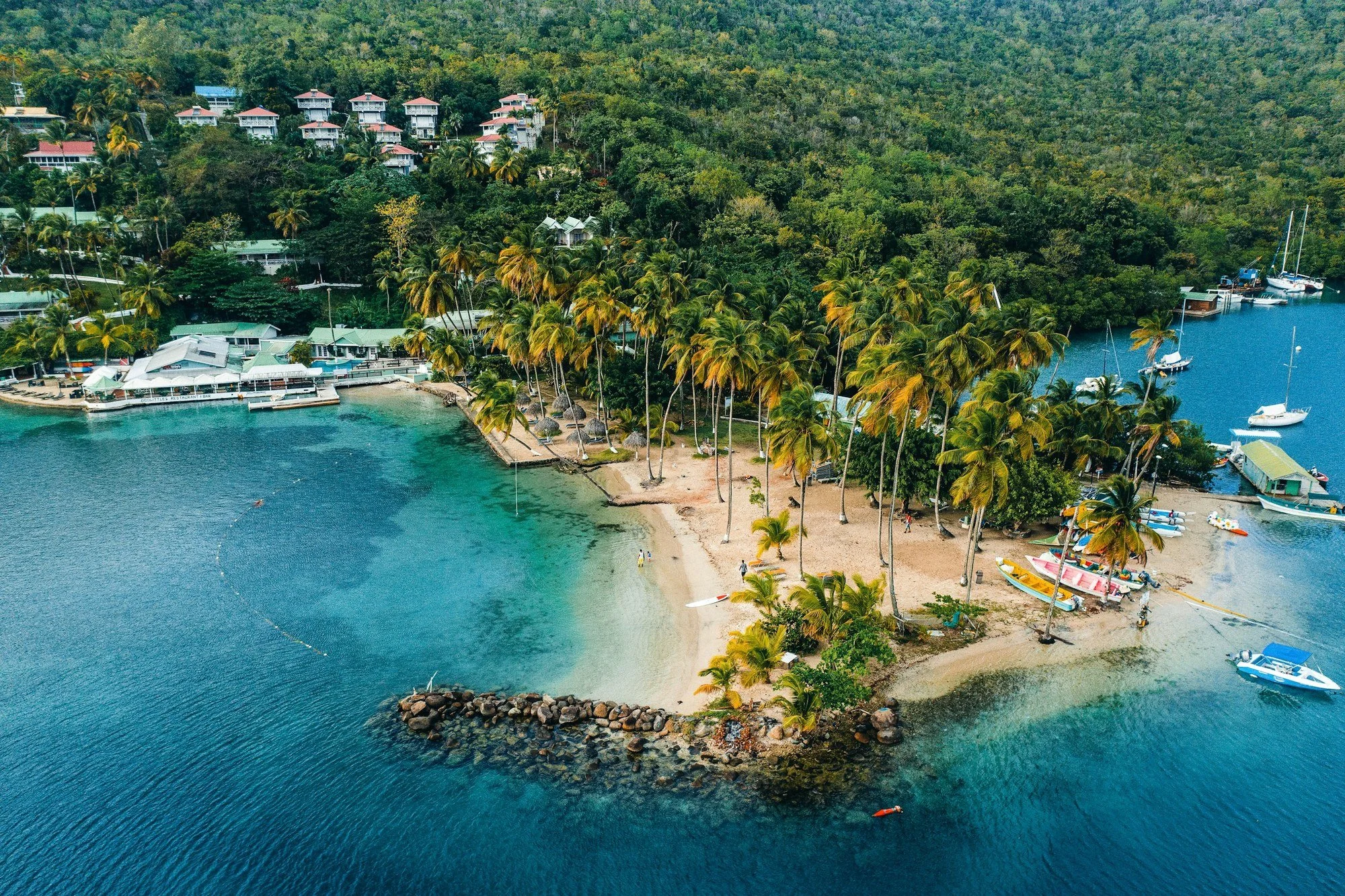
Marigot Bay is a sheltered bay framed by steep green hills and palm trees. Its inner harbor, known as Hurricane Hole, has long been used as a safe anchorage during storms. Today it's a favorite stop for sailors, with a marina, waterfront restaurants and boat excursions.
The North: Rodney Bay, Pigeon Island and Castries
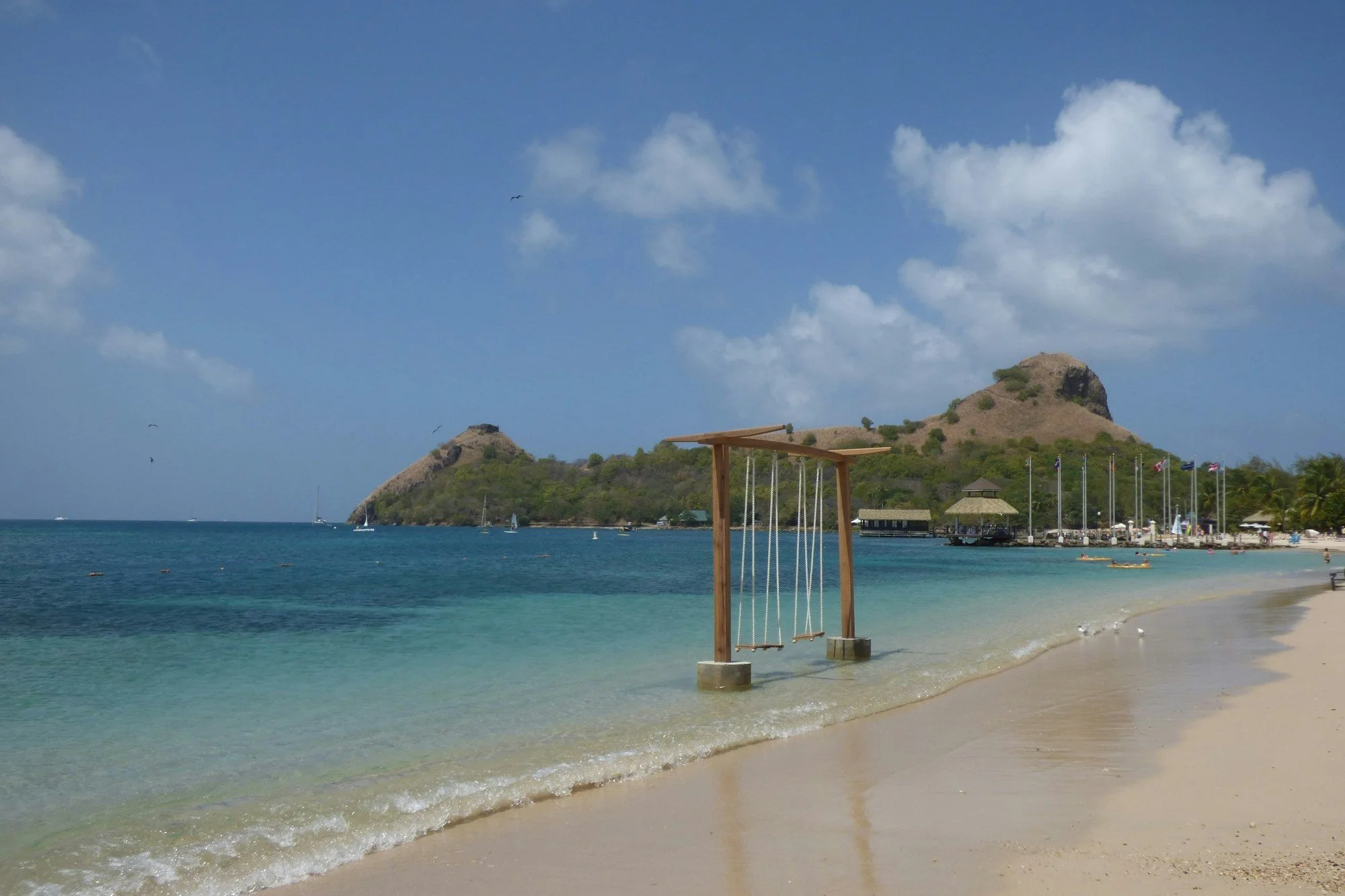
Pigeon Island National Landmark, in the lively north, blends history and beach time: hike up to Fort Rodney, an 18th-century British fort with views over Rodney Bay, explore old military ruins and a small museum run by the Saint Lucia National Trust, then cool off at the calm beach. Nearby, the fishing village of Gros Islet hosts a famous Friday night street party with grilled seafood and music, a tradition the tourism authority says goes back more than 50 years.
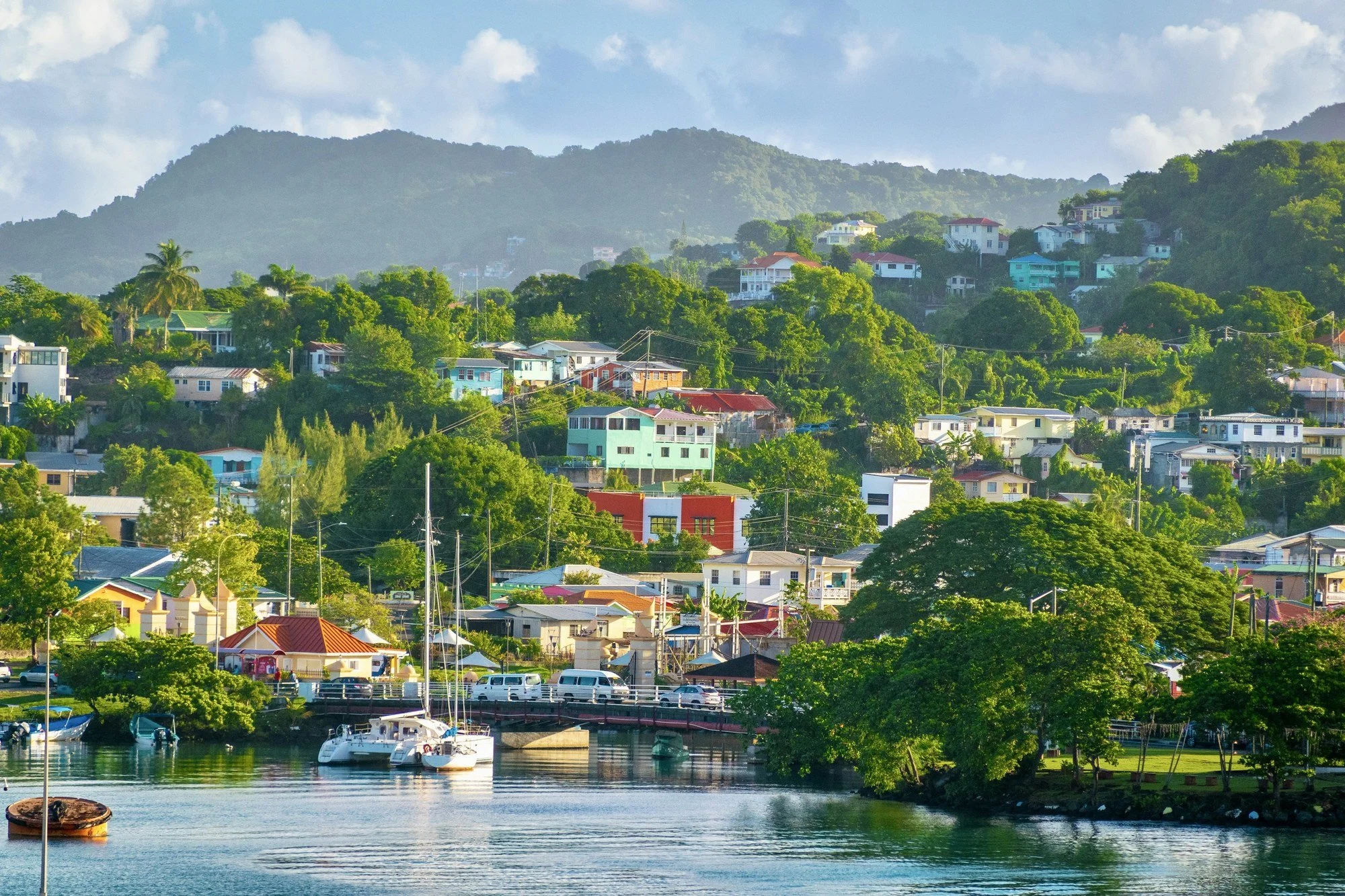
Castries, the capital, is home to a busy market with fresh produce, spices and local crafts, and to Derek Walcott Square, named for the Nobel Prize-winning poet. Above the city, Morne Fortune looks out over the harbor. St. Lucia is a cruise stop too, so if you're weighing a cruise against a resort stay, our family Caribbean cruises post shows what visiting several islands in one trip is like.
Culture and Food
St. Lucia changed hands between the French and the British fourteen times, earning the nickname "Helen of the West Indies," and became independent in 1979. That history lives on in its Creole culture, French place names and Kwéyòl language. The island celebrates its heritage with Jounen Kwéyòl, Carnival and the Saint Lucia Jazz & Arts Festival. Try local dishes like green fig and saltfish, Creole fish stews, cassava bread and cocoa treats, plus locally made rum.
Where to Stay: St. Lucia Resorts
St. Lucia offers all-inclusive resorts, adults-only retreats, family resorts, boutique hotels and private villas. Where you stay shapes your trip:
- The north (Rodney Bay and Gros Islet) puts you near Reduit Beach, restaurants, nightlife and Pigeon Island.
- Soufrière and the southwest offer the classic Piton views and quieter, more secluded resorts, including some with rooms left open on one side to the view.
- Marigot Bay suits travelers who love boats and a calm, scenic harbor.
- The south, around Vieux Fort, is quieter and close to Hewanorra International Airport.
Our Caribbean all-inclusive vacations guide explains what's usually included, and if you're also considering Mexico, see Riviera Maya vs. Cancún.
St. Lucia for Couples and Honeymoons
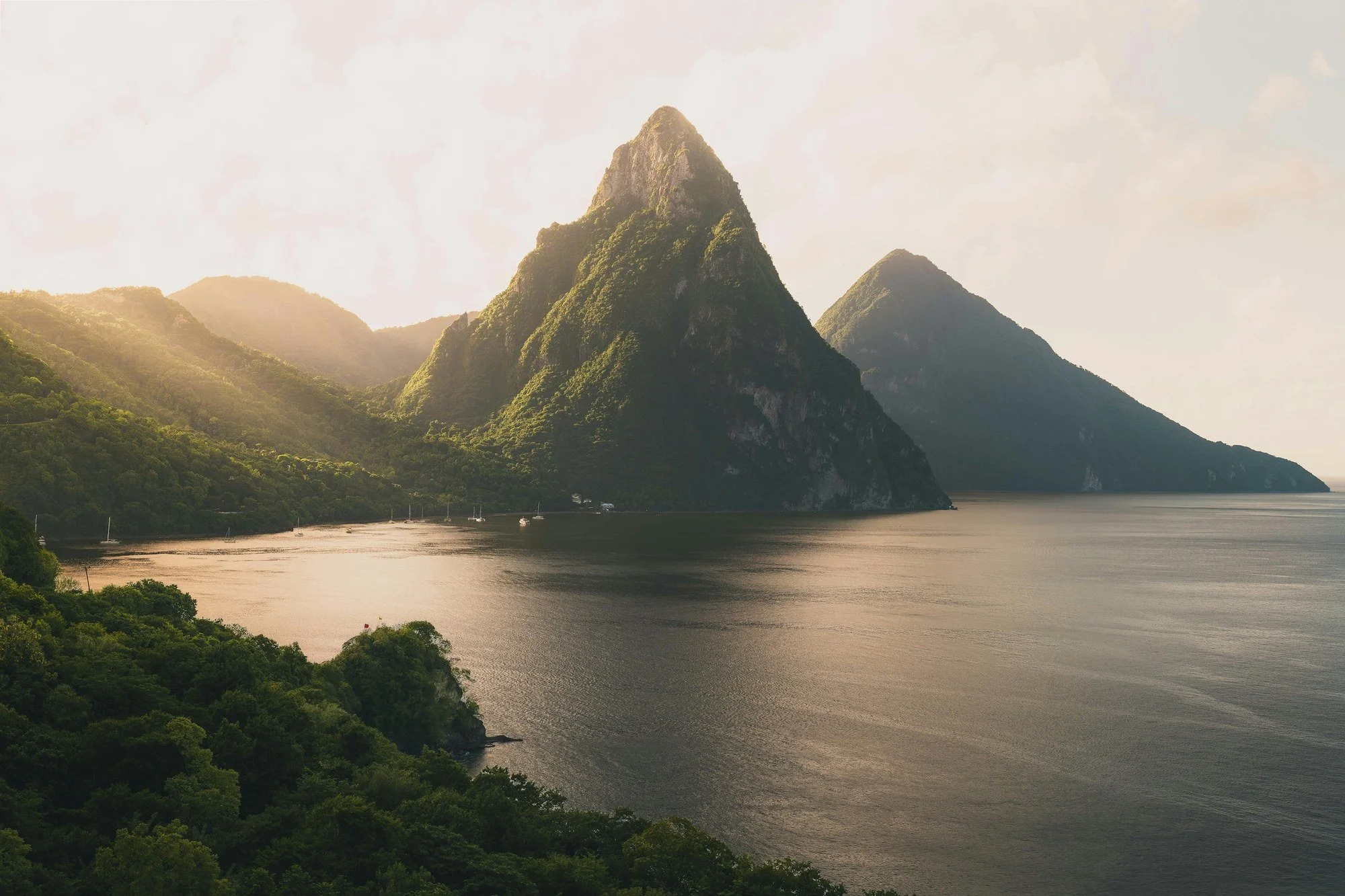
St. Lucia is made for romance. Couples can take a sunset catamaran cruise, share a volcanic mud bath at Sulphur Springs, book a couples' spa treatment with local cocoa and coconut, or simply watch the Pitons change color at dusk. Our Caribbean honeymoons guide has more ideas. Comparing romantic islands? Read about our Antigua honeymoon and anniversary trips and why Jamaica and Couples Resorts are our favorite escape.
St. Lucia for Families
Families will find calm water at Reduit Beach and gentle swimming at Pigeon Island. Rainforest zip-line tours are beginner-friendly and suit most ages, though they have weight limits. Several family resorts offer kids' clubs, pools and water parks. Our group and family vacations page explains how Ashley plans trips for families and groups of every size.
Getting There and Getting Around
Hewanorra International Airport (UVF) is in Vieux Fort, about 40 miles south of Castries, the capital. George F. L. Charles Airport (SLU), just outside Castries, is an inter-island airport. Plan your transfer carefully: according to the tourism authority, Soufrière is about 45 minutes from Hewanorra by car, while Rodney Bay and Gros Islet are about an hour and a half away.
Taxis are easy to find. To rent a car, you'll need a temporary local driving permit, and remember to drive on the left. Water taxis and helicopter transfers are other options.
When to Go
St. Lucia is warm all year. The St. Lucia Tourism Authority says the driest and busiest time to visit is December to April. The rainy season runs from June to December, though showers are usually brief. The Atlantic hurricane season runs from June 1 to November 30, according to NOAA's National Hurricane Center, with most activity between mid-August and mid-October. Consider travel insurance if you travel during those months.
Travel Documents
The U.S. State Department says U.S. citizens need a passport that's valid for the length of their stay, with one blank page for the entry stamp. No visa is needed if you have a return or onward ticket, proof of accommodation and proof of funds. Air travelers should complete St. Lucia's online immigration form within three days before arrival, and the State Department warns that skipping it may lead to denial of entry. Also note that camouflage clothing is banned in St. Lucia. You'll need a passport book to fly home to the U.S. Always confirm current requirements with official sources before you travel.
Is St. Lucia Right for You?
Choose St. Lucia for mountain scenery with your beach time, a romantic getaway, or a family trip full of adventure. At Simply Travel by Ashley, Ashley Muhlenkamp can help you choose the right area and resort, and her planning services are completely free to you, with no hidden fees. Tell us about your trip to get started.
St. Lucia FAQ
Where is St. Lucia?
St. Lucia is a volcanic island in the Eastern Caribbean, between Martinique to the north and St. Vincent to the south. It's about 27 miles long and 14 miles wide.
What are the Pitons in St. Lucia?
The Pitons, Gros Piton and Petit Piton, are two volcanic spires rising side by side from the sea near Soufrière. They're part of the Pitons Management Area, a UNESCO World Heritage Site since 2004.
Which airport should I fly into for St. Lucia?
St. Lucia's international airport is Hewanorra International Airport (UVF) in Vieux Fort, in the south. George F. L. Charles Airport (SLU), near Castries, is an inter-island airport.
Do U.S. citizens need a passport to visit St. Lucia?
Yes. The U.S. State Department says your passport must be valid for the length of your stay. No visa is needed with a return or onward ticket, and air travelers should complete St. Lucia's online immigration form before arrival. Always confirm current requirements before you travel.
When is the best time to visit St. Lucia?
St. Lucia is warm year-round. The driest and busiest season is December to April, according to the St. Lucia Tourism Authority.
When is hurricane season in St. Lucia?
The Atlantic hurricane season runs from June 1 to November 30, according to NOAA's National Hurricane Center, with most activity between mid-August and mid-October.
What is the drive-in volcano in St. Lucia?
Sulphur Springs, near Soufrière, is often called the Caribbean's only drive-in volcano. Visitors see steaming vents and bubbling pools and can bathe in nearby volcanic mud baths.
Is St. Lucia good for families?
Yes. Reduit Beach and Pigeon Island have calm water, rainforest zip-lining suits most ages, and several family resorts offer kids' clubs and pools.
Let's Plan Your St. Lucia Vacation
Ready to see the Pitons for yourself? Fill out the "Let's Plan Your Vacation!" form on our homepage, call (419) 852-4445, or email simplytravelbyashley@gmail.com. Ashley's planning services are free, and she's available Monday through Friday, 9:00 AM to 4:00 PM Eastern.